

Shopify stores built around how your category sells.
A furniture store and a streetwear drop need different stores. We design the front end around how your category actually buys — and engineer the Shopify underneath to survive growth.
Senior engineers reply within 4 hours- Categories
- 18 D2C categories
- Shipped work
- Real clients in 8 of them
- Approach
- Category-specific front end, Shopify-deep engineering
- Where we start
- A store and tracking diagnostic
Find your category.
Categories marked “Client work” are ones where we have shipped for real, named brands. The rest describe the capability honestly, without invented proof.
- Client workHome & FurnitureChairs & Company · Furnishka · WUD Homes
- Client workFashion & ApparelThe Last Ape · The Basics Woman
- Client workRugs & Home TextilesObeetee
- Client workEthnic & Silk WearAnantham Silks
- Client workFood & BeverageGolden Tounge
- Client workLifestyle & DécorWorld of Toji
- Client workSports & Riding GearMotodrift
- Client workAyurveda & OrganicIndian Herbs
- IndustryBeauty & Personal CareBeauty converts on trust signals, ingredient transparency, and subscription mechanics — a discovery-heavy category that rewards content depth.
- IndustryHealth & WellnessSupplement and wellness brands live and die on subscription retention and claims-safe content.
- IndustryOutdoor & Adventure GearDurability claims, sizing complexity, and a research-heavy buyer need PDPs that answer questions before they're asked.
- IndustryStationery & Personalised GiftsPersonalisation and occasion-based gifting change the entire funnel.
- IndustryJewellery & AccessoriesHigh-AOV, low-frequency purchases need trust signals and a checkout experience that doesn't introduce friction at the worst possible moment.
- IndustryFootwear & StreetwearStreetwear and sneaker culture run on drop mechanics and infrastructure that survives launch-minute traffic spikes.
- IndustryBaby & KidsParents buy on repeat, across a predictable age-and-stage curve.
- IndustryElectronics & GadgetsSpec-driven buyers compare before they buy, and warranty/support concerns weigh heavily on conversion.
- IndustryEyewear & WatchesFit and face-shape uncertainty is the biggest conversion blocker in eyewear.
- IndustryPet CareConsumables mean predictable reorder cycles that reward subscription infrastructure.
Real work across categories
 160Products on the new storefront
Luxury Furniture & Décor — Chairs & Company sells statement furniture, made-to-order sofas, and décor from an Experience Centre in Indiranagar. We rebuilt their Shopify store to sell the way their showroom does — with finished spaces, a way to start a custom piece online, and a reason to visit in person.
Chairs & CompanyRead the case study →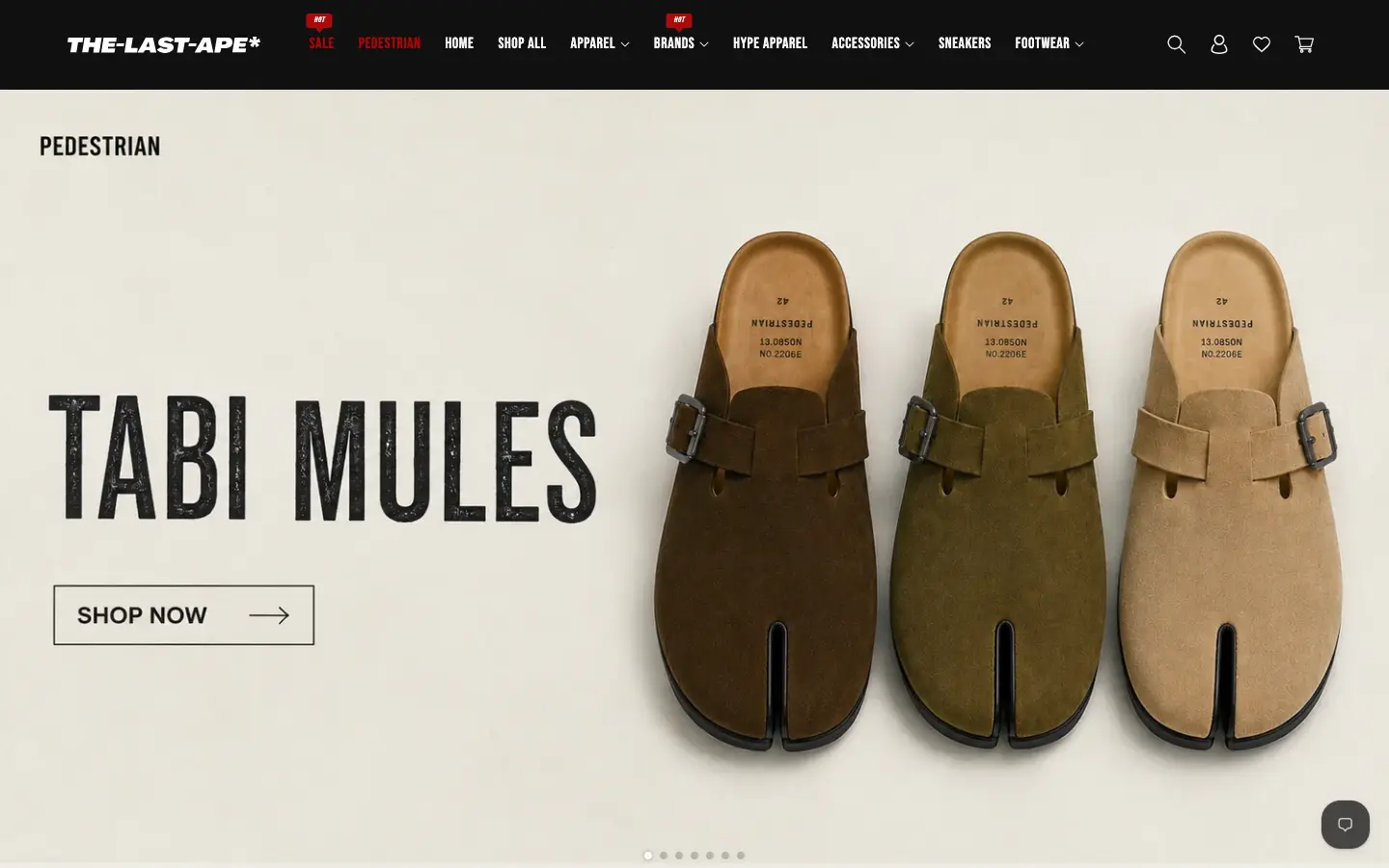 +180%Mobile conversion rate
Urban Streetwear — The Last Ape had the culture, the community, and the clout. Their Shopify store wasn't keeping up. We rebuilt it around how streetwear actually sells — drops, mobile, and speed.
The Last ApeRead the case study →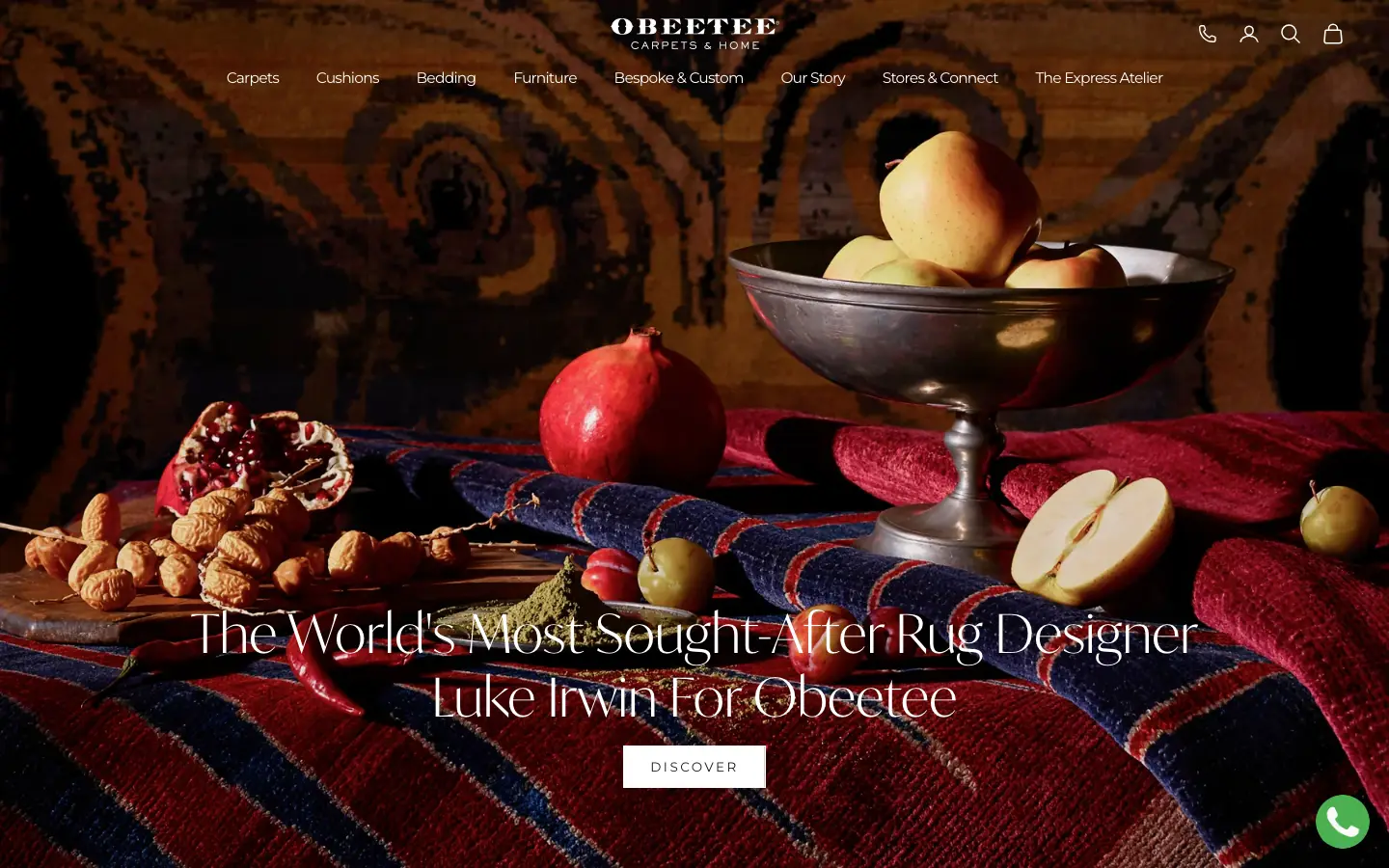 2Separate storefronts — India and UK
Premium Rugs & Textiles — We built Obeetee's Shopify presence from the ground up and never left. Two separate stores for two markets, and a standing team handling landing pages, SEO, design, and performance week to week.
ObeeteeRead the case study →Four things that genuinely change by category.
Most of a Shopify build is identical everywhere. These four are not — and they are where a generic agency playbook quietly costs you a year.
- Difference 01
Catalogue complexity
Sixty drop SKUs and four thousand SKUs with fitment data are different architectures, not different sizes of the same one. Variant and option limits, metafield modelling, search and filtering, and feed structure all follow from this.
- Difference 02
Average order value
Low AOV rewards removing friction. High AOV rewards removing doubt — provenance, dimensions, delivery windows, financing, and a human channel to close on. The same storefront cannot do both well.
- Difference 03
Repeat-purchase economics
Consumables compound through subscriptions and reorder flows. Considered purchases compound through acquisition efficiency and referral. This decides where the engineering budget goes before anything is designed.
- Difference 04
Returns and compliance
Fit-driven return rates, reverse-logistics cost per return, claims and labelling rules, warranty and hallmarking — constraints that have to be modelled into the catalogue, not retrofitted onto a live one.
The same team, every lever.
- ServiceShopify Design & DevelopmentTheme setup, custom design, and new store launches — built around how your category actually sells.
- ServiceShopify Deep EngineeringCustom Liquid, Plus, Hydrogen, custom apps, and the catalogue architecture large SKU counts need.
- ServiceCare & Support RetainerOngoing maintenance, monitoring, and SLAs so a working store stays working.
- ServiceAI & AutomationCatalogue, ops, and support automation — usually the fastest payback for high-SKU categories.
- ServiceGrowth Marketing & CROPaid, SEO, retention, and CRO measured against real Shopify revenue, not platform-reported numbers.
- ServiceStrategy & ConsultingAudits, roadmaps, and analytics — the right first step when you are not sure what is broken.
- ServiceMigrate to ShopifyFrom WooCommerce, Magento, BigCommerce, Wix, Squarespace, WordPress, PrestaShop or Salesforce Commerce Cloud.
Choosing a Shopify agency for your category — answered.
Does hiring a Shopify agency with experience in my exact category actually matter?
For the merchandising and product-page layer, yes — someone who has sold your category before already knows which objections kill the sale and what data the product page has to carry. For the engineering layer underneath, category matters far less than Shopify depth: a slow Liquid render, a failing order webhook, or an app-bloated theme behaves identically in every vertical. The practical approach is to hire for platform depth and test for category understanding in the first conversation.
What actually differs between D2C categories on Shopify?
Four things, mostly. Catalogue complexity — SKU count, variant and option limits, fitment or size data. Average order value, and the length of consideration cycle it creates. Repeat-purchase economics, meaning whether subscriptions and reorder flows are the growth engine or a distraction. And category compliance — claims rules, labelling, warranty, or hallmarking that has to be modelled in the catalogue rather than bolted on later.
How do I test whether an agency really knows my category?
Ask what the three most common failure points are for this category on Shopify. Ask them to critique a store they themselves built in it and say what they would do differently now. Ask what they would refuse to build for you. Specific answers reference data models, apps, and consequences. Generic answers reference "conversion optimisation" and "best practices" — that is a sales script, not experience.
You list 18 categories — isn't that just a generalist claiming everything?
We are D2C generalists with deep Shopify engineering, and we say that plainly rather than pretending to be a boutique specialist in eighteen niches at once. Each industry page shows the real, named case studies where we have shipped in that category, and states honestly where we have not yet — describing the capability instead of inventing proof.
My brand spans more than one category. Which page should I read?
Read the one that matches your catalogue structure and price point rather than your marketing positioning, because those two things drive the build. A skincare brand selling ₹600 refills and a skincare brand selling ₹12,000 devices need very different stores despite sharing a shelf — the first is a replenishment problem, the second is a considered-purchase and trust problem.
Do you only work with brands already on Shopify?
No. A meaningful share of our work starts as a migration onto Shopify from WooCommerce, Magento, BigCommerce, Wix, Squarespace, WordPress, PrestaShop, or Salesforce Commerce Cloud — with full 301 redirect mapping, customer records, and order history preserved.
Where should we start if we're not sure what's actually wrong?
With a diagnostic rather than a build. A store, tracking, and analytics audit under Strategy & Consulting produces a prioritised list you own — including the items you can fix in-house without hiring anyone. Committing to a rebuild before that is how brands spend a large budget solving the wrong problem.
Something else on your mind? Ask an engineer directly — we reply within 4 hours.
Shopify agency by category: what actually differs, and how to check an agency really knows yours
“Shopify agency for [category]” is one of the most searched and least useful queries in ecommerce, because almost every agency answers yes to every category. This page takes the opposite position: what genuinely differs between D2C categories on Shopify, where those differences should change what you build, and how to test whether an agency’s category claim is real before you sign anything.
We work across 18 D2C categories. In 8 of them there is real, named client work you can read end to end. In the rest, the industry page describes the capability and says so plainly rather than dressing a guess up as a case study.
Don't see your category?
We're D2C generalists with deep Shopify expertise — tell us about your brand and we'll tell you plainly whether we're a fit.
- 01A senior engineer reads itNot a sales rep — you hear back within 4 hours on business days.
- 02A focused conversationWe talk through your store, what you need and what it would honestly take.
- 03A clear scope and priceFixed scope wherever the work allows, so you know the cost before anything starts.