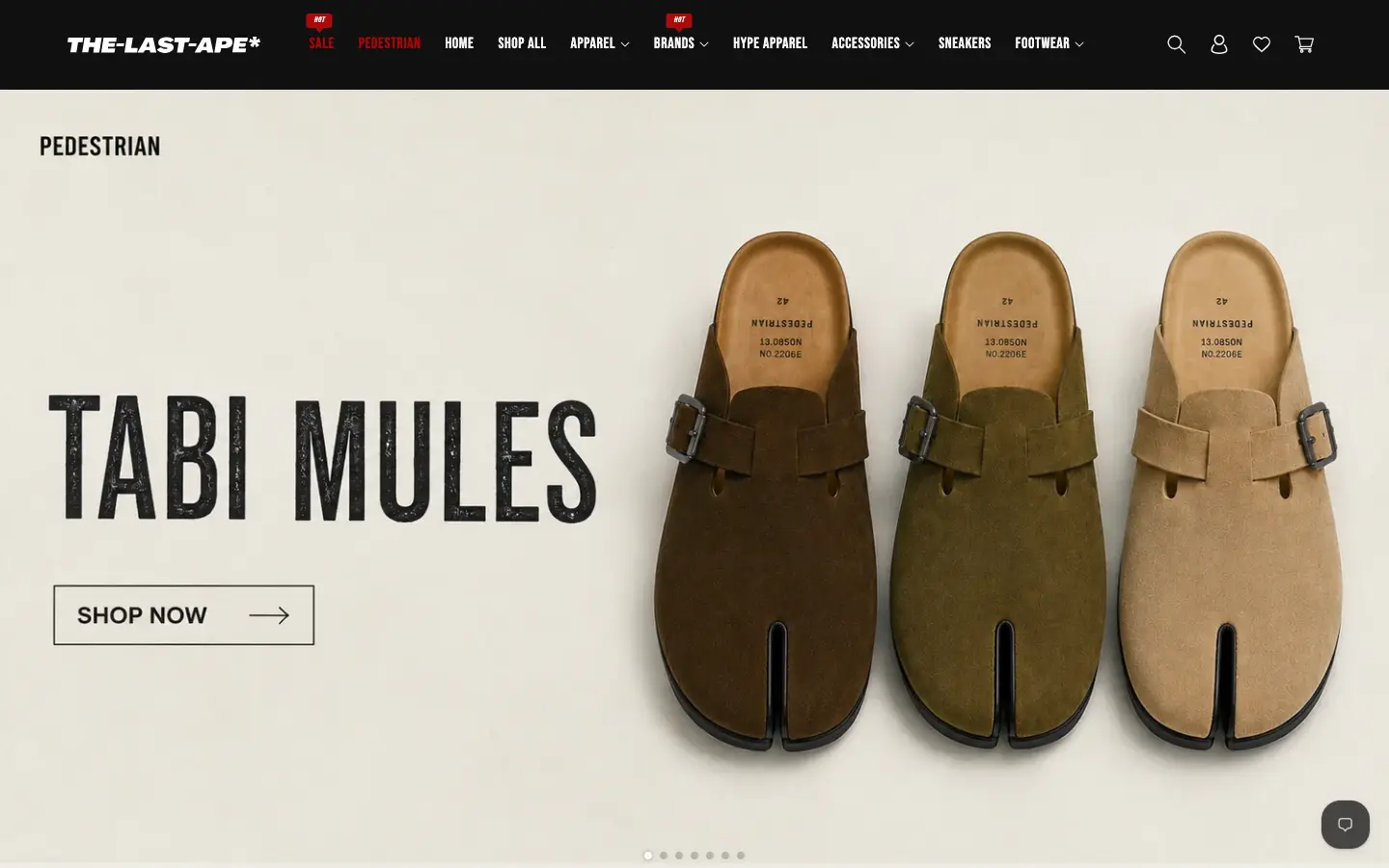
Streetwear and footwear brands run on a genuinely different traffic pattern than the rest of ecommerce: instead of steady daily demand, revenue concentrates into launch-minute spikes that can hit fifty to a hundred times baseline traffic in seconds. Building for this category on Shopify means treating drop infrastructure — queueing, inventory-aware checkout, bot mitigation — as core engineering, not an occasional edge case, because the store's worst day and its best revenue day are often the exact same day.
Underneath the infrastructure question sits a genuinely different merchandising problem too: size-run demand is never even, hype and community sentiment can outrun what the brand can actually fulfil, and resale-market dynamics shape buyer expectations in ways a typical apparel brand never has to think about. A footwear store that solves for average-day traffic and treats every size as equally likely to sell will consistently mismanage both its infrastructure and its inventory around the moments that matter most.
The app layer beyond queueing and bot mitigation
Queue systems and bot detection solve the launch-minute infrastructure problem, but a few other tools matter for the full drop lifecycle. Size-run inventory and demand-forecasting tools matter more here than in general apparel, since sneaker and streetwear size distribution follows known, fairly predictable skews (certain sizes sell out in seconds while others sit unsold), and planning allocation around that pattern rather than an even split reduces both stockouts and stranded inventory. Waitlist and back-in-stock apps do real revenue recovery work, capturing demand from a sold-out drop that would otherwise be lost entirely, converting it into a restock notification and a second sales moment. Raffle or draw-based purchase apps are increasingly common as an alternative to pure first-come-first-served drops, since they reduce the incentive for bot activity by removing the speed advantage bots have over real customers. And authentication or verification badges/apps matter for resale-adjacent categories, since buyer trust in a footwear brand's legitimacy is closely tied to confidence the product is genuine, particularly for limited or collaboration releases.
SEO for a category driven by drops, models, and release calendars
Footwear and streetwear search behaviour is dominated by model-specific and release-specific queries — a buyer searches the exact sneaker name or collaboration, not a generic category term — which means product pages need to be built and indexed well before a drop, not launched cold on release day when search interest peaks. Release-calendar and "coming soon" content, kept as real indexable pages rather than social-only posts, captures search interest in the days and weeks a drop is being anticipated, when search volume for that specific release is climbing fastest. Evergreen category and size-guide content still matters for the non-drop side of the catalogue — "best running shoes for [use case]," sizing conversion content — and shouldn't be neglected in favour of hype-driven release pages alone, since it captures steady search demand that doesn't depend on a launch calendar. Structured data with accurate size and colourway availability also helps Google Shopping surface the specific SKU still in stock during a drop's long tail.
Merchandising size-run imbalance and limited-collaboration drops
Footwear catalogue management has to account for a pattern most other categories don't see as sharply: within a single drop, popular sizes sell out in seconds while others sit unsold for weeks, and treating the size run as evenly distributed inventory misreads the actual demand curve. The merchandising fix is partly upstream — allocating stock toward historically popular sizes rather than an even split — and partly on-page, surfacing real-time size availability clearly so a buyer isn't stuck adding a sold-out size to cart and hitting a wall at checkout. Limited and collaboration drops need distinct merchandising treatment from core, always-available lines: separate landing pages, clear "limited release" framing, and often a waitlist or notify-me mechanic built in from the start rather than bolted on after a sellout. Post-drop, unsold sizes from a limited run need a clear markdown or bundle strategy, since they typically can't be replenished and sitting on stranded, non-restockable inventory is a worse outcome than moving it at a discount while there's still demand.
Why community and hype-cycle marketing require operational readiness, not just reach
Streetwear marketing runs on community and scarcity signals — Discord communities, sneaker forums, and creator co-signs — more than broad-reach advertising, and a brand that builds genuine community engagement before a drop generates organic anticipation paid media alone can't replicate. But this is also the category where marketing can outpace operations most dangerously: a brand whose hype and community momentum drives traffic far beyond what its checkout and inventory systems can handle turns its best marketing moment into a failed launch and a support-ticket flood, which does lasting damage to exactly the community trust the marketing was built on. The practical implication is that drop marketing and infrastructure planning need to happen together, not sequentially — knowing the expected reach of a launch campaign should directly inform queue capacity and inventory-lock testing, rather than marketing and engineering treating the drop as two separate workstreams that happen to share a launch date.
Pricing psychology in a scarcity-driven, resale-aware category
Footwear and streetwear buyers are unusually comfortable with genuine scarcity messaging, because limited releases and sellouts are a real, expected feature of the category rather than a manufactured urgency tactic — which means honest "limited quantity" or "drops at [time]" messaging works here in a way it wouldn't in a high-consideration category like furniture. Buyers in this category are also unusually aware of resale value; a release expected to resell above retail creates its own demand signal, and pricing communication needs to be straightforward about retail price without either encouraging or appearing to enable resale speculation, since a brand seen as complicit in flipping can damage trust with the actual wearer-customer base it depends on long-term. Trust signals that matter most are less about authenticity badges (buyers largely assume a direct brand store is legitimate) and more about fulfilment reliability — will the order actually ship in the size and colourway confirmed, and will it arrive before resale-driven impatience turns into a chargeback or dispute.