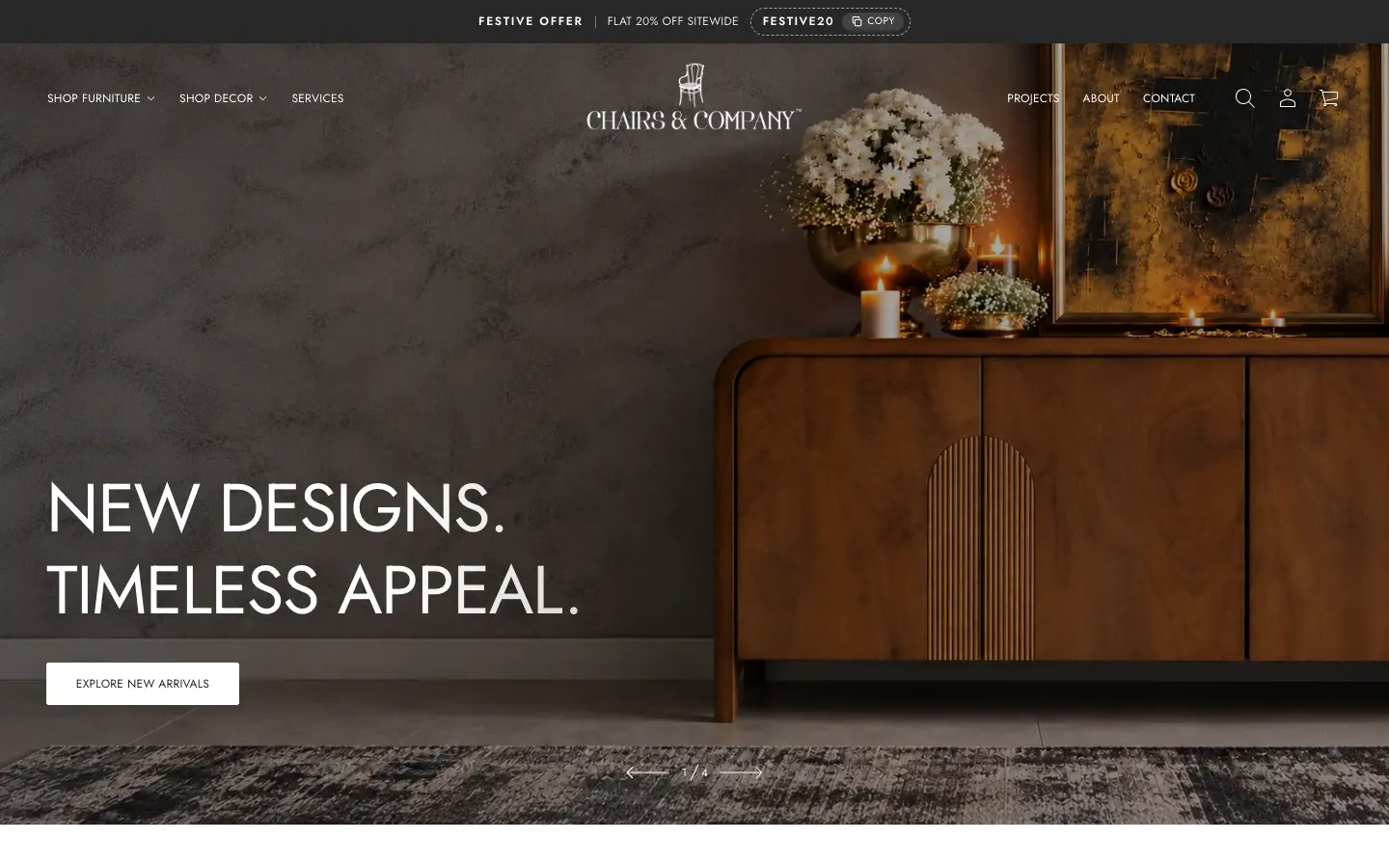
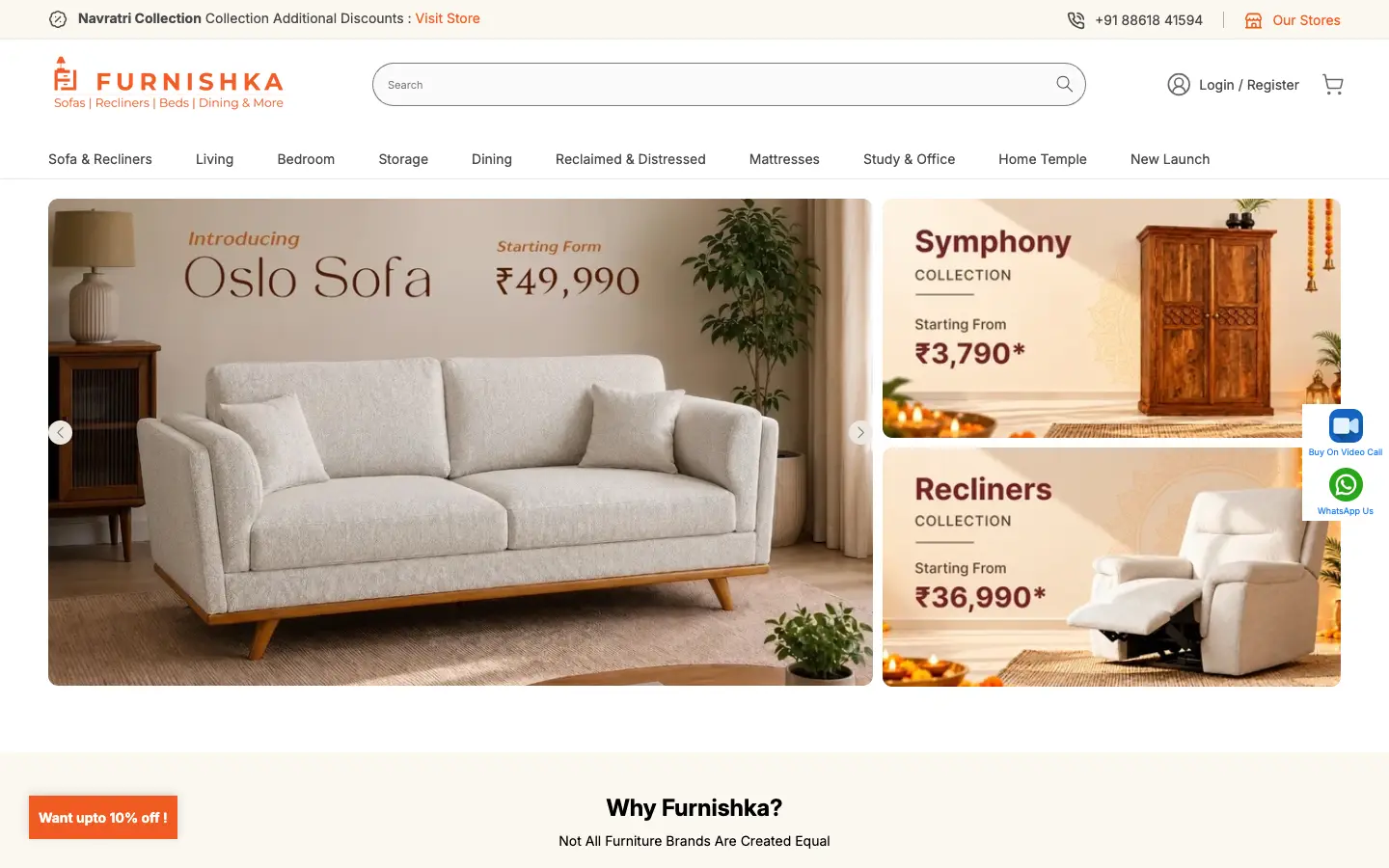
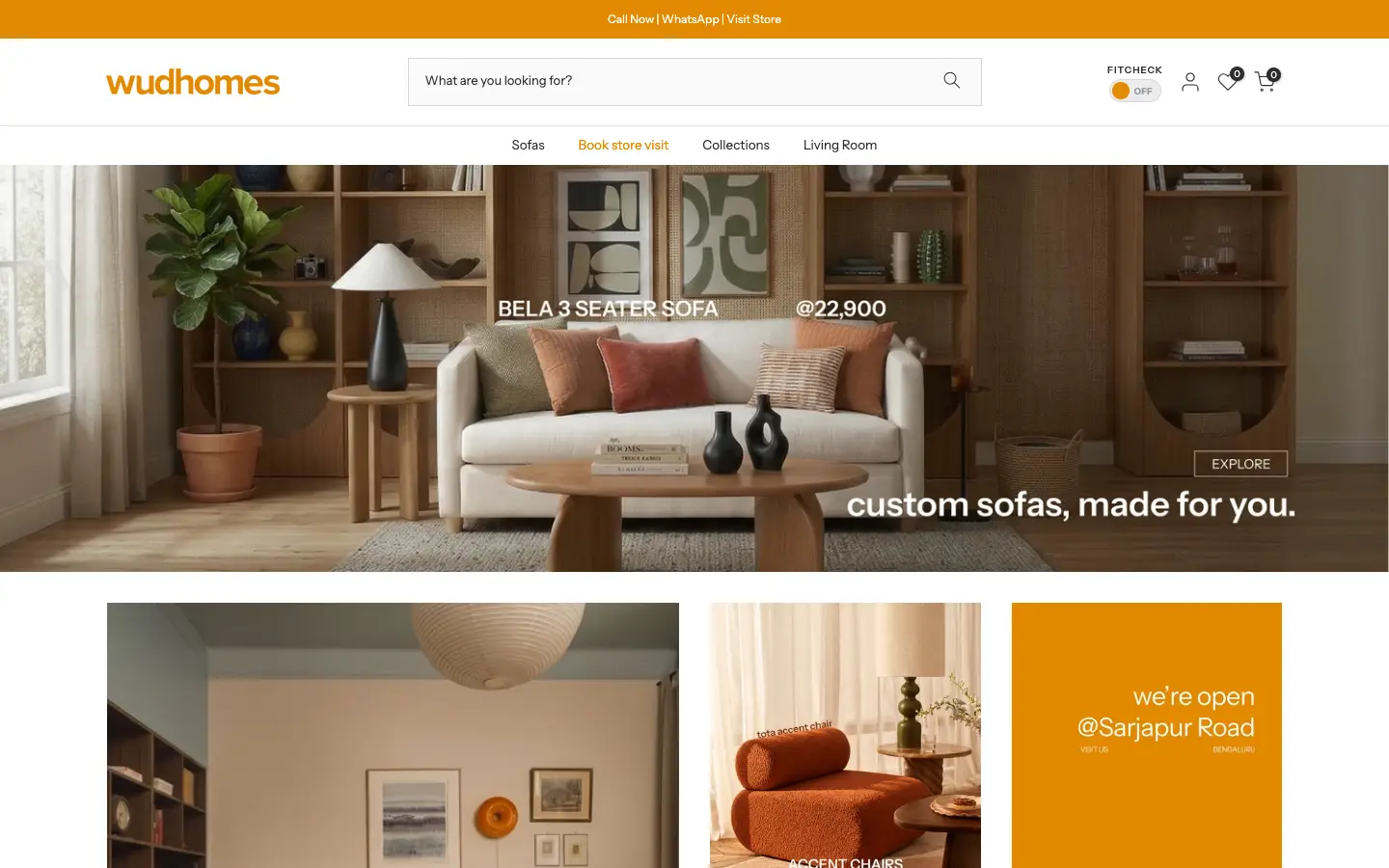
Furniture is the category where Shopify has to behave the least like a typical impulse-commerce platform: purchases involve multiple sessions, real financing conversations, and a shipping process that looks more like freight logistics than a courier drop-off. The store's job isn't to close a sale in one visit — it's to survive being reopened, measured against, and compared across three or four browsing sessions before the customer is actually ready to commit at a meaningfully high price point.
That changes what "conversion" even means operationally: attribution has to account for long research cycles, PDPs need to resolve genuine fit and scale anxiety that photography alone can't, and checkout needs to communicate a real, calculated delivery date rather than a generic shipping estimate. A furniture store built with fashion-category assumptions — fast sessions, simple parcel shipping, one-touch decisions — will underperform one engineered specifically around how big-ticket, considered purchases actually happen.
The app layer that matters once you're past AR and financing
AR visualisation and BNPL messaging get the most attention, but a few other tools do quieter, equally important work. Freight-aware shipping-rate apps matter enormously here because standard Shopify shipping rules are built for parcels, not pallets — a couch or dining table needs real dimensional and weight-based freight calculation at checkout, not a flat rate that either overcharges small orders or loses money on large ones. Appointment or consultation-booking apps matter for higher-ticket pieces where a buyer wants a real conversation before committing — a booked call converts meaningfully better than a passive contact form for purchases in this price range. Wishlist and save-for-later apps do real work too, since furniture's multi-session research cycle means a buyer who can't easily return to a saved shortlist is more likely to lose the thread entirely and not come back. And post-delivery review or UGC apps matter because a piece of furniture styled in a real home does more selling than a studio shot, similar to fashion's reliance on real-context imagery.
SEO for furniture is a long-research-cycle problem, not a keyword-volume one
Furniture buyers search in stages that map to where they are in a long decision: broad discovery ("modern dining table"), comparison ("sofa vs sectional for small living room"), and dimension-specific queries ("dining table for 6 under 60 inches") close to the point of purchase. Ranking for that last category — genuinely specific, size- and fit-driven searches — tends to convert far better than broad category terms, because the buyer has already done most of the emotional decision-making and is now solving a practical fit problem. That means product and collection copy needs to surface real dimensions, materials, and room-fit guidance in indexable text, not just in a spec table buried below the fold. Content that answers "will this fit my space" style questions directly — room size guides, layout suggestions — captures buyers earlier in the multi-session research cycle than a product page alone can, and gives the store a reason to be revisited across those sessions instead of losing the buyer to a competitor's more helpful content.
Merchandising scale, material, and configuration without overwhelming the buyer
Furniture PDPs carry more decision-relevant information than almost any other category — dimensions, material and finish options, weight capacity, assembly requirements — and the merchandising challenge is presenting all of it without burying the buyer in a spec dump. The pieces that convert best structure this as a clear hierarchy: a room-context hero image and AR or scale tool first, since fit anxiety is the single biggest hesitation, followed by material and finish selection presented visually rather than as a text dropdown, since a customer choosing between "walnut" and "oak" wants to see the actual grain, not just read the word. Configurable products (modular sofas, made-to-order dimensions) need clear, real-time price and delivery-time updates as options change, because an ambiguous "starting from" price on a highly configurable item creates the same hesitation a hidden shipping cost does. The room-visualisation problem is worth solving directly rather than working around — buyers genuinely can't judge scale from a product photo alone, and that uncertainty stalls purchases that are otherwise ready to close.
Why furniture returns are an entirely different logistics problem than apparel
Furniture return rates are typically much lower than fashion's, but each return costs vastly more — freight both ways, potential white-glove pickup, and a damaged or restocked item that often can't be resold at full price. That economic asymmetry means the operational priority is different: instead of optimising for fast, cheap reverse logistics like fashion does, furniture brands need to prevent the return from happening at all through accurate dimensions, honest material photography, and clear assembly expectations set before purchase. When damage-in-transit does happen — which is common enough with bulky, semi-fragile freight to plan for — the resolution needs a clear photo-based claims process rather than requiring a full return, since shipping a damaged dining table back and forth is often more expensive than replacing a single damaged part. Delivery-date accuracy also functions as a return-prevention tool: a buyer who was told a specific, accurate delivery window is far less likely to reject or dispute a delivery than one working off a vague multi-week estimate.
Why price anchoring and trust signals matter more at furniture's price points
Furniture sits at the opposite end of the consideration spectrum from fashion or beauty — nobody buys a sofa on impulse, and the trust signals that barely register on a low-ticket purchase become decisive at a high one. Financing messaging (showing a monthly EMI figure alongside the full price) does real psychological work here, reframing a large purchase as a manageable one without changing the actual cost. Clear, prominently placed return and warranty policy matters disproportionately too — a buyer about to commit a significant sum will look for any ambiguity as a reason to hesitate, and a return policy buried in a footer link is often enough on its own to stall the purchase. Urgency and scarcity messaging, which works well in fashion, tends to backfire in furniture if it reads as manufactured — this buyer is deliberate by nature, and pressure tactics applied to a high-value decision erode trust rather than accelerating it.
The most common technical mistake furniture stores make on Shopify
The most common failure is running freight-heavy products through Shopify's default parcel-based shipping logic — flat or weight-only shipping rates either eat margin on heavy items or overcharge on lighter ones, and both outcomes either lose money silently or lose the sale at checkout. A second common mistake is under-investing in delivery-date accuracy: showing a generic "5–7 business days" estimate instead of a pincode-calculated real date does measurably less trust-building work, especially at this price point where the buyer is already nervous about a large purchase. A third mistake is neglecting last-session attribution given how long the research cycle actually is — a store that only credits the final session for a conversion will systematically undervalue the retargeting, content, and email touches that brought the buyer back the third and fourth time, and can end up cutting the very channels that were doing the real work of nurturing a high-AOV decision to close.
What a furniture brand typically spends on Shopify and growth infrastructure
Furniture's cost structure is dominated by two things most categories don't need: freight-aware logistics tooling and high-fidelity visual tools that resolve scale and fit anxiety. An early-stage furniture brand can launch for $5,000–$12,000 upfront (AR Quick Look setup, a freight-rate shipping app, financing/BNPL integration) plus $2,000–$5,000 a month for CRO and content, since even a modest catalogue needs real dimensional-shipping logic that a $50 fashion item never requires. A scaling brand running configurable products, multi-warehouse freight, and appointment-booking for high-ticket consultations typically needs $20,000–$60,000+ for the build and $10,000–$30,000+ a month in growth spend, with a larger-than-usual share going toward retargeting and content given how long the research cycle runs. The variable that moves this budget most is catalogue configurability: a brand selling fixed-SKU furniture needs a fraction of the engineering spend a brand selling made-to-order, dimension-configurable pieces does, where real-time price and delivery-date calculation across thousands of configuration combinations becomes a genuine engineering project, not an app installation.
Why furniture's ROI timeline is measured in sessions, not days
Furniture pays back on a longer, multi-touch timeline than almost any other D2C category, and the investments that matter most reflect that directly. Room-visualisation and financing-messaging investment tends to show payback within 60–90 days, since it targets the specific hesitation — fit and price anchoring — that stalls a purchase that's otherwise ready to close. But the full ROI picture only becomes visible once attribution accounts for a buyer's third or fourth session, since furniture buyers behave more like B2B purchasers than impulse shoppers, and a store measuring only last-click conversion will undervalue the retargeting and content investment that actually earned the sale over several weeks. What's genuinely different about this vertical's growth economics is that returns are rare but expensive, so ROI here comes disproportionately from prevention — accurate dimensions, real delivery-date data, honest material photography — rather than from the fast, iterative CRO testing that works in lower-AOV categories. That favours a team, agency or in-house, that can hold a longer measurement window rather than optimising for week-over-week conversion lift alone.