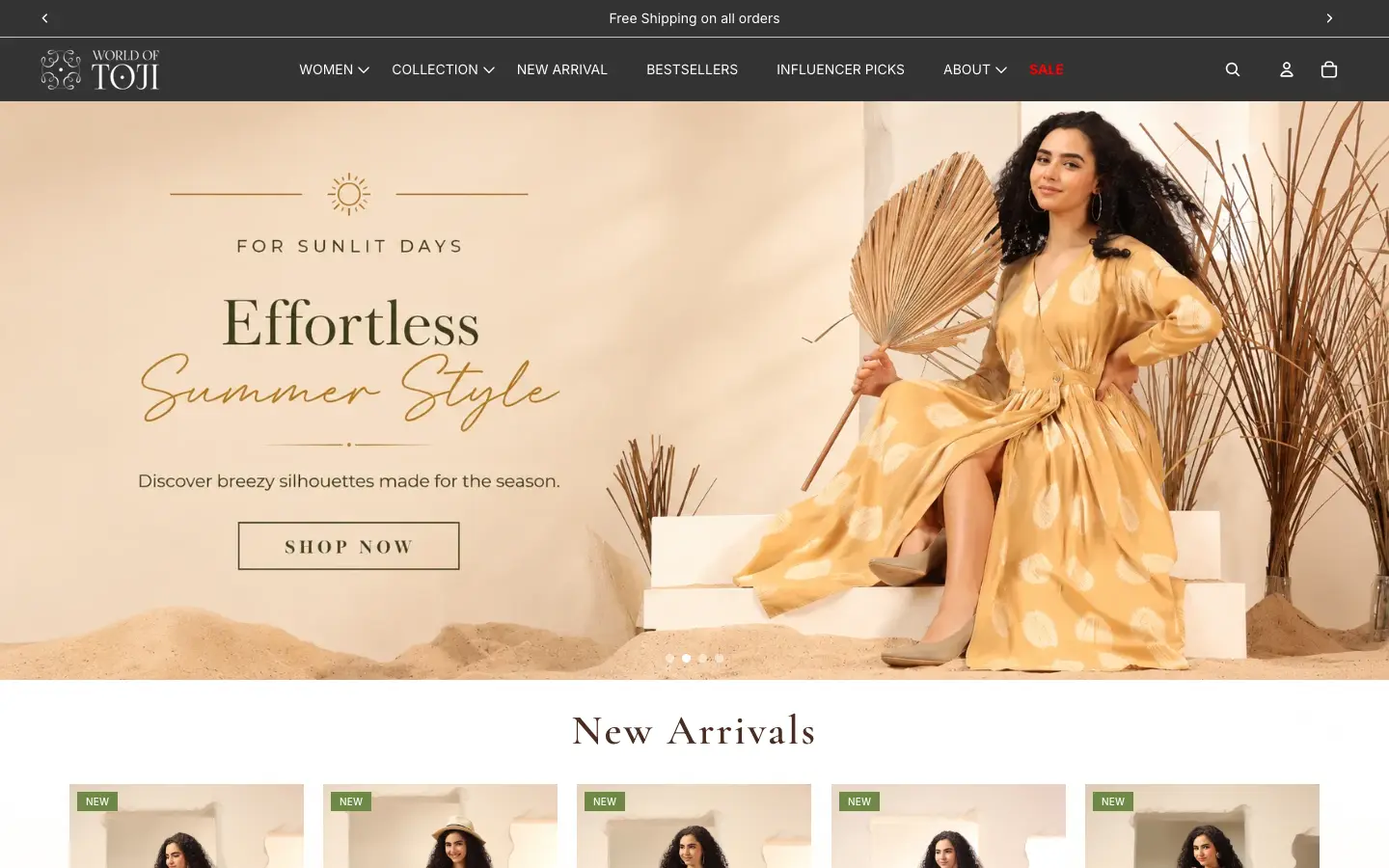
Décor is an inspiration-first category before it's a transaction — most buyers arrive browsing for ideas, not hunting for a specific SKU, which means a store built like a catalogue of isolated products is fighting the way this buyer actually shops. The brands that convert well here sell the room, not just the object, and structure the store around that from the collection page down.
It's also a low-frequency, considered category — a customer redecorates every year or two, not every month — so retention has to work on an inspiration-and-new-collection cadence rather than a reorder reminder that simply doesn't apply. Layer in that a meaningful share of the catalogue is fragile and shipping-sensitive, and the operational bar is higher than the pretty product photography suggests.
Shopify apps that support how décor buyers actually browse and buy
Editorial and lookbook-style merchandising is the biggest structural need in this category, and Shopify's native metafields and Collections can support it without a custom page-builder for every seasonal drop, but purpose-built visual-merchandising or page-builder apps are worth it once seasonal collection launches become frequent. Room-visualisation or AR tools that let a buyer see a piece in context — even approximately — reduce the single biggest hesitation in décor, which is not knowing whether something will actually suit the space it's being bought for. Back-in-stock and waitlist apps matter more here than in fast-moving categories, since décor drops are often limited runs and a buyer who missed a piece is a warm re-engagement target rather than a lost sale. Packaging-protection or shipping-insurance apps are worth the incremental cost given how much of this catalogue is genuinely fragile — the cost of the app is trivial next to the cost of a damaged-in-transit claim and the customer-trust damage that comes with it.
SEO built for inspiration searches, not just product searches
Décor search behaviour splits sharply between top-of-funnel inspiration queries — "boho living room ideas," "minimalist bedroom decor," "housewarming gift ideas under [price]" — and bottom-of-funnel product queries for a buyer who already knows what they want. Most décor stores over-invest in the second and under-invest in the first, which leaves genuine search volume on the table, since inspiration searches are often higher-volume and represent buyers earlier in a longer decision cycle worth capturing early. Editorial content — styled room breakdowns, "how to style X" guides, seasonal decorating content — ranks for exactly these inspiration queries and, done well, functions as both SEO and merchandising simultaneously, since the same styled photography that ranks in search also sells the look on the page itself. Gifting-occasion content ("housewarming gifts," "gifts for someone who just moved") is a genuinely underused angle for décor brands specifically, since décor sits naturally at the intersection of self-purchase and gift-purchase in a way many categories don't.
Structuring a catalogue around rooms and looks instead of flat product listings
The merchandising question that matters most in décor is whether the catalogue is organised the way the brand manufactures products (by category — vases, cushions, wall art) or the way the customer actually shops (by room, by aesthetic, by occasion). The second structure converts better, because it does the outfit-planning work for the buyer instead of leaving them to mentally assemble a look from an undifferentiated grid. Practically, this means collection pages built around a styled aesthetic or room type, with cross-sell logic that surfaces "complete the look" pairings rather than generic "customers also bought" recommendations that ignore stylistic coherence. Seasonal and occasion-based collections (festive, gifting, a specific colour trend) need to be launchable quickly — the ability to stand up a new themed collection page in hours rather than a multi-week dev cycle is what actually lets a lifestyle brand capture a trend or occasion window while it's still live, rather than publishing it after the moment has passed.
Shipping fragile décor without the damage-return rate eating the margin
A meaningful share of décor inventory is genuinely breakable, and the packaging investment that prevents damage in transit is cheap relative to the cost of a damaged-item claim, a replacement shipment, and a customer whose first experience with the brand was a broken product. Carrier selection matters more here than in soft-goods categories — a courier optimised for speed over careful handling is a bad fit for ceramics or glass, even if it's cheaper per shipment. Larger décor pieces (furniture-adjacent items, large mirrors, statement lighting) often need white-glove or specialised freight handling that standard parcel carriers aren't built for, and pretending otherwise at checkout just moves the problem to a damaged delivery instead of preventing it. Gift-wrapping and scheduled delivery matter for this category too, given how much décor purchasing happens around housewarming and gifting occasions — surfacing those options at checkout, with genuine fulfilment-side support behind them, captures revenue the buyer is already inclined to spend.
The channels that actually work for lifestyle and décor brands
Pinterest is disproportionately effective for this category specifically because "browsing for home inspiration" is close to the platform's core use case — a well-tagged, styled product pin can drive sustained organic traffic long after a paid campaign would have stopped. Instagram works similarly well when the content is genuinely styled and in-context rather than studio product shots, since the category sells a feeling as much as an object. Influencer and creator partnerships built around home tours or styling content — rather than a simple product mention — convert better because they show the product doing the job the buyer is actually trying to picture, in a real space rather than an idealised studio. Email built around new-collection announcements and lookbook drops, rather than a reorder cadence that doesn't fit a low-frequency category, is the right retention tool here — the goal is staying top-of-mind for the next redecorating moment, not prompting an unrealistic repeat purchase next week.
What earns trust from an inspiration-driven décor buyer
Material and craftsmanship authenticity matter more than the styling photography alone can convey — a buyer paying a premium for a handmade or well-sourced piece wants some evidence behind that claim, whether it's material detail, maker background, or production process, not just an adjective like "artisanal" doing all the work. Real customer photos showing a piece in an actual home, alongside the professionally styled shots, do meaningful trust-building work in a category where the gap between "styled for a photoshoot" and "how it actually looks in a normal room" is a real and common source of buyer anxiety. A clear, genuinely fair return policy matters disproportionately for higher-priced décor, since the buyer can't inspect texture, weight, or finish quality in person before committing, and the return policy is effectively substituting for that in-person inspection. Transparent handling of damage-in-transit claims — a fast, no-friction replacement process rather than a bureaucratic one — also functions as a trust signal upfront, since fragile-goods buyers are implicitly aware of the shipping risk and want to see the brand has a real answer for it.
The mistake that quietly caps conversion for décor stores
The most common mistake is merchandising the catalogue the way the warehouse is organised — by product category — instead of the way the customer actually browses, by room, look, or occasion, which leaves the buyer to do outfit-planning work most won't bother doing and quietly caps conversion well below what the product quality would otherwise support. A closely related mistake is treating photography as purely aesthetic rather than as functional SEO and merchandising infrastructure — under-investing in styled, in-context photography saves a modest amount upfront but costs both search visibility for inspiration queries and on-page conversion, since this category sells the room as much as the object. On the operational side, under-investing in packaging to save a small per-shipment cost routinely backfires once damaged-in-transit claims and their associated refunds, replacements, and support time are counted honestly — the packaging spend that looks like an unnecessary cost line is usually cheaper than the damage it prevents.
What a lifestyle or décor brand typically spends on Shopify and editorial content
Décor's cost structure leans heavier on content and packaging than most categories, because the category sells the room, not just the object, and because a meaningful share of the catalogue is genuinely breakable. An early-stage décor brand can launch for $3,500–$9,000 upfront (editorial collection setup via metafields, a room-visualisation or AR tool, packaging-protection review) plus $2,000–$5,000 a month, with styled photography and lookbook content production consuming a larger share of that budget than in most verticals, since white-background product shots simply don't convert an inspiration-driven buyer. A scaling brand running frequent seasonal collection launches, gifting-flow checkout, and white-glove freight for larger pieces typically needs $12,000–$30,000+ for the build and $10,000–$25,000+ a month in growth spend, with Pinterest and editorial content production often out-costing paid social given how much of this category's traffic is inspiration-led rather than direct-response. The variable that moves this budget most is fragility and size mix — a catalogue skewing toward small, sturdy décor needs far less packaging and freight investment than one carrying larger, breakable, or furniture-adjacent pieces.
Why décor's ROI runs on inspiration cycles, not purchase frequency
Décor is a low-frequency category — a customer redecorates every year or two, not every month — so the ROI timeline for retention investment looks different from almost anything else in D2C: a lapsed-customer win-back flow tied to new-collection announcements typically shows its return not in weeks but across an entire redecorating cycle, sometimes six months or more after the last purchase. Editorial and Pinterest-style content investment, by contrast, tends to show payback faster and more durably than paid social, often within 60–90 days, because inspiration content keeps generating organic traffic well after a paid campaign would have stopped, and the same styled photography that ranks in search is also what sells the room on the page itself. What's genuinely different about this vertical's growth economics compared to a generic D2C store is that purchase frequency can't be engineered up the way it can in consumable categories — so ROI here comes from staying present across a long, sporadic decision window rather than from a subscription or reorder mechanic, which argues for a team fluent in content and seasonal merchandising over one built purely around funnel testing.