

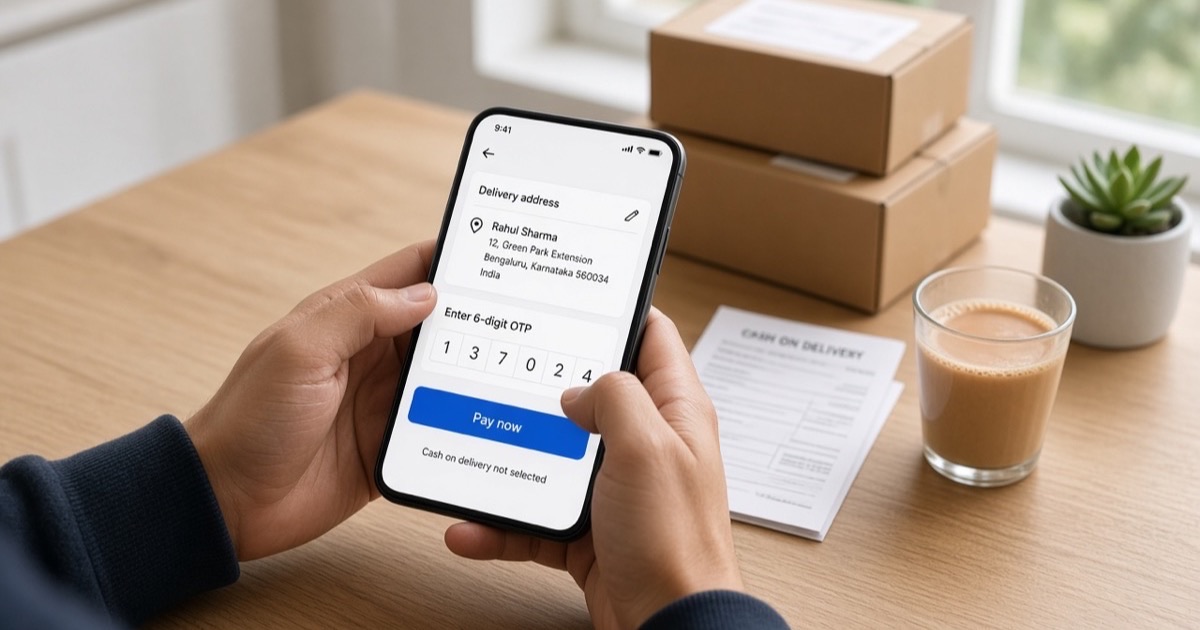
If you run a D2C brand on Shopify in India, you have been pitched a one-click checkout. GoKwik, Razorpay Magic Checkout, Shopflo and Fastrr (Shiprocket's checkout, renamed) all promise the same three things: faster checkout through address prefill, fewer RTOs through COD controls, and lower costs. On a sales call they sound interchangeable. They are not. The most important difference isn't a feature at all. It's whether the checkout runs inside Shopify's own checkout or replaces it, and that one fact decides what you pay Shopify, which Shopify features you lose, and how much platform risk you take on. This guide compares the four on how they actually work, what they publish about pricing, and where each one fits, then walks through a cost model on a ₹10 lakh a month store so you can see which numbers really move. Pricing and features are taken from each vendor's own pages and Shopify App Store listings as of November 2026. All four negotiate, so treat the numbers as a starting point and get your quote in writing.
The short answer
- Under ₹3–4 lakh a month in sales, or mostly prepaid already: you probably don't need a third-party checkout yet. Stay on Shopify's checkout, control COD with Shopify Functions, and spend the money on traffic.
- COD is more than 40% of orders and RTO is hurting margin: a one-click checkout is worth testing, mainly for its COD and address tools. GoKwik and Fastrr are built around this problem.
- You want the lowest platform risk and to keep Shopify's checkout: Razorpay Magic Checkout's current Shopify app works inside Shopify's native checkout, so you keep Shopify's checkout features and stay clearly within Shopify's rules. You also keep paying Shopify's transaction fee.
- You want deep control over checkout design, offers and payment routing: Shopflo is the most customisable of the four and lets you route payments across several gateways.
- Above ₹50 lakh a month: compare a third-party checkout against simply moving up a Shopify plan, because Shopify's transaction fee drops from 2% on Basic to 0.6% on Advanced and 0.2% on Plus.
The rest of this guide explains why.
The decision that matters most: inside Shopify's checkout, or outside it?
There are two ways a one-click checkout can plug into a Shopify store, and every vendor uses one or the other (some offer both).
Embedded, inside Shopify's checkout. A panel opens on your store, logs the shopper in with an OTP, fills in their saved address, then hands them to Shopify's own checkout to pay. The order and payment run through Shopify as normal. Razorpay describes its current Shopify app exactly this way: "an embedded checkout for Shopify that works within Shopify's native checkout" that "hands them straight to Shopify to complete payment."
External, outside Shopify's checkout. The shopper clicks Buy on your cart and lands on the provider's own checkout. They pay there, through a licensed payment aggregator the provider is integrated with, and the provider then creates the order in Shopify through the API. GoKwik, Shopflo and Fastrr's full checkouts have historically worked this way.
That difference has three consequences.
1. Shopify's transaction fee. Because Shopify Payments isn't available in India, Shopify charges a third-party transaction fee on every order paid through an Indian gateway inside its checkout: 2% on Basic, 1% on Grow, 0.6% on Advanced and 0.2% on Plus, from Shopify's India pricing page. Shopify's Help Center says this fee doesn't apply to manual payment methods, "which include cash on delivery (COD), bank deposits, checks, test orders, and draft orders marked as paid or pending." External checkouts collect the money themselves and create the order in Shopify marked as paid with a manual payment method, so the fee doesn't arise. Shopflo states plainly that "orders placed on Shopflo Checkout do not attract any Shopify transaction fees." Embedded checkouts complete payment inside Shopify, so the fee applies as normal.
2. Shopify's rules. Shopify's App Store requirements (1.1.2, "Use Shopify checkout") say: "Apps that bypass checkout or payment processing, or register any transactions through the Shopify API in connection with such activity, are prohibited." That rule governs what can be listed in the App Store, and it's the reason the Shopify App Store versions of these products have moved toward working inside Shopify's checkout. External checkouts are widely used in India and nobody has announced a crackdown, but they sit on the side of the line Shopify's policy is written against. That's a risk to price in, not a reason to panic.
3. What you keep. Inside Shopify's checkout you keep Shop Pay, Shopify's discount and Functions logic, checkout extensions, subscription apps and Shopify's own checkout analytics. Outside it, the provider has to rebuild or replace each of those, and some never fully match. More on that below.
So before you compare features, ask every vendor one question in writing: for my store, does the shopper pay inside Shopify's checkout or on yours?
GoKwik (Kwik Checkout)
What it is: the best-known Indian checkout, built around COD and RTO. GoKwik sells a wider suite (engagement, ads, shipping, returns), but Kwik Checkout is the core product.
How it connects: GoKwik is not a payment aggregator. Its own FAQ says: "GoKwik does not process any prepaid or partial COD payments. All prepaid and online payment transactions are handled by the respective payment aggregator integrated with Kwik Checkout." Its Shopify App Store app is called Kwik COD & Checkout.
Pricing as published: the Shopify App Store listing shows an Emerging plan at $35 a month, with "3.5% applicable on transactions by payment aggregator." GoKwik's own pricing page has listed the Emerging plan at ₹3,000 a month for stores doing up to 2,000 orders a month, with Enterprise pricing on quote above that. Payment aggregator charges are extra. Ask exactly which orders the percentage applies to (all orders, prepaid only or COD only) and whether figures include 18% GST.
Strengths:
- The deepest COD toolkit of the four: RTO risk scoring, COD blocking by pincode or risk, COD fees, partial COD and prepaid discounts
- A large shopper network, so many returning shoppers get their address filled automatically
- Strong adoption among Indian D2C brands, so most agencies and apps already integrate with it
Watch out for:
- The percentage fee can be the biggest line on the bill once volume grows, so model it on your real order mix
- Its performance claims, such as large RTO reductions, are vendor figures. Test on your own store before believing them
Best for: COD-heavy brands in fashion, beauty and accessories where RTO is the biggest leak.
Razorpay Magic Checkout
What it is: Razorpay's checkout layer, sold alongside its payment gateway.
How it connects: Razorpay's current Shopify app is embedded. It prefills the address from what Razorpay says is a network of 200 million+ saved addresses, then hands the shopper to Shopify's native checkout to pay. The listing also includes COD controls.
Pricing as published: the app is free to install. Razorpay's pricing page lists Magic Checkout as enterprise pricing, so you'll need a quote. Razorpay's standard gateway rate is 2% plus 18% GST on common domestic methods. Because payment completes inside Shopify's checkout, Shopify's transaction fee for your plan still applies.
Strengths:
- The lowest platform risk of the four, because it works inside Shopify's checkout rather than around it
- You keep Shopify's checkout features, extensions and analytics
- One vendor for gateway and checkout if you already use Razorpay
Watch out for:
- It doesn't remove Shopify's transaction fee, so it doesn't offer the fee saving the external checkouts do
- Its COD controls are simpler than GoKwik's or Fastrr's
- As of early November 2026 the Shopify app has a 2.0 rating from 37 reviews. Read the recent ones and ask for references from stores of your size
Best for: brands that want faster checkout and basic COD control without leaving Shopify's checkout, and brands already on Razorpay.
Shopflo
What it is: a customisable checkout aimed at D2C brands that want control over design, offers and payments.
How it connects: Shopflo runs its own checkout and integrates with your existing payment gateway. It supports several gateways at once and can route payments between them, which helps when one gateway has downtime or a poor success rate on a payment method.
Pricing as published: Shopflo prices on a platform access fee plus a variable percentage that falls as your GMV grows. Its site lists a Starter plan for new brands from ₹3,000 a month and says its base plan starts at ₹10,000 a month. Its billing terms, updated April 2026, describe a monthly minimum charge collected upfront (their example is "3k/1% whichever is higher"), with invoices including 18% GST. Final pricing depends on GMV and order volume.
Strengths:
- The most flexible checkout UI and offer logic of the four: payment-method discounts, COD charges, upsells and branding
- Multi-gateway routing for better payment success rates
- No Shopify transaction fee on its orders, by its own statement
Watch out for:
- The monthly minimum. At low volume, the minimum can cost more than the fee you save
- Read the contract terms on notice periods and credits before signing
Best for: brands with a CRO or growth team who will actually use the customisation, typically above ₹10 lakh a month.
Fastrr Checkout (formerly Shiprocket Checkout)
What it is: Shiprocket's checkout, renamed Fastrr. It comes from India's largest shipping aggregator, so its strength is the link between checkout and delivery.
How it connects: Fastrr offers a full one-click checkout with address intelligence, prepaid incentives, COD controls and abandoned checkout recovery, and works with Shopify and other platforms. Shiprocket also sells smaller Shopify apps separately: Fastrr Cart (a cart drawer with upsells, from $9.99 a month) and Fastrr Login (OTP login and address prefill, from $7.99 a month).
Pricing as published: custom pricing for the full checkout, with no setup fee advertised. Get a quote.
Strengths:
- Delivery data from the shipping side feeds its COD and RTO decisions
- Its smaller apps let you add OTP login or a better cart without replacing the whole checkout
- A natural fit if you already ship with Shiprocket, though its checkout doesn't require it
Watch out for:
- With no public price for the full checkout, comparison takes a sales call
- Check whether the setup you're offered is embedded or external, since that changes your Shopify fee and risk
Best for: brands shipping with Shiprocket, and brands that want to add OTP login or a better cart before committing to a full checkout replacement.
What it really costs: a worked example
Fees get all the attention in sales pitches, so here's a model that puts them next to the numbers that actually move. The Shopify fees and gateway rate are published rates. Everything marked "assumption" is a placeholder: replace it with your own numbers.
The store:
- ₹10 lakh of orders a month at a ₹1,250 average order value, so 800 orders
- Shopify Basic plan (2% third-party transaction fee)
- Gateway at 2% + 18% GST = 2.36% on prepaid orders
- Today: 50% prepaid, 50% COD
- COD RTO of 26% and prepaid RTO of 2%, in line with Shipway's ShipNotes FY25 report (more below)
- Assumption: each RTO costs ₹150 in forward and return shipping and packaging
Scenario A: Shopify's checkout, as today
- Shopify fee: 2% of ₹5 lakh prepaid = ₹10,000
- Gateway: 2.36% of ₹5 lakh = ₹11,800
- RTO cost: 400 COD orders × 26% = 104 RTOs × ₹150 = ₹15,600
- Monthly cost: ₹37,400. Delivered orders: 392 prepaid + 296 COD = 688
Scenario B: an external one-click checkout
- Assumption: the checkout costs 1% of GMV = ₹10,000
- Assumption: prepaid share rises from 50% to 60%, and COD RTO falls from 26% to 21% thanks to OTP, address checks and COD rules
- Shopify fee: ₹0
- Gateway: 2.36% of ₹6 lakh prepaid = ₹14,160
- RTO cost: 320 COD orders × 21% = 67 RTOs × ₹150 = ₹10,050
- Monthly cost: ₹34,210. Delivered orders: 470 prepaid + 253 COD = 723
What this shows:
- The cost saving is only about ₹3,200 a month. The checkout fee eats most of the Shopify fee you avoid, and higher prepaid share means more gateway fees.
- The real gain is 35 more delivered orders, about ₹43,750 of extra delivered revenue a month, from fewer RTOs and more prepaid orders. That's more than ten times the fee saving.
- So the question isn't "which checkout saves the most fees?" It's "which checkout moves my prepaid share and RTO the most?" If a checkout doesn't move those, it rarely pays for itself.
Two more comparisons worth running before you sign anything. First, moving from Basic to Grow costs about ₹4,100 more a month (₹5,599 vs ₹1,499 on annual billing) and halves Shopify's fee, so it pays for itself once prepaid sales pass roughly ₹4 lakh a month. Second, at low volume a checkout's monthly minimum can exceed the whole fee saving, which is why we rarely recommend one below ₹3–4 lakh a month. Our Shopify payment gateway guide for India covers the gateway side of this maths in detail.
The bigger lever: COD and RTO
The strongest public data on this comes from Shipway's ShipNotes FY25 report, based on millions of D2C shipments: fewer than 2% of prepaid orders are returned to origin, against nearly 26% of COD orders. The same report found RTO rising with delivery time (22% when the first attempt happens in 1–2 days, 35% after more than 5 days), varying by city from 18% in Vadodara to 35% in Patna, and peaking at 28% for orders between ₹500 and ₹1,000.
That's why the COD tools matter more than the speed claims. The ones worth paying for:
- OTP login before COD. Confirms the phone number is real and reachable, which removes a large share of fake and impulse orders
- Address prefill and checks. Saved addresses from a shopper network are more complete than typed ones, and incomplete addresses are a common cause of failed delivery
- COD rules by pincode, order value and risk. Turn COD off where your own RTO data says it fails, rather than everywhere
- COD fees and prepaid discounts. A small COD charge or a prepaid discount moves a meaningful share of shoppers to prepaid
- Partial COD. The shopper pays a small amount upfront and the rest on delivery, which filters out most low-intent orders
Not every checkout does all of these equally well, so judge them on your categories and pincodes. And the checkout is only half of RTO. Delivery speed, WhatsApp order confirmation and fast NDR follow-up matter just as much. Our guide to Shopify returns and RTO management covers the rest of the process.
What you give up when you leave Shopify's checkout
External checkouts are a trade, not a free upgrade. Before switching, check each of these against your store:
- Shop Pay and Shopify's checkout itself. Shopify tunes its checkout across millions of stores, and returning Shop Pay users skip most of the form. Neither carries over to someone else's checkout
- Discount and Functions logic. Shopify discounts, Shopify Functions and checkout rules you've built won't automatically apply on an external checkout. The provider has its own discount engine, so check that every live offer can be rebuilt
- Subscriptions. Subscription apps such as Recharge depend on Shopify's checkout. Most external checkouts hand subscription orders back to Shopify's checkout, so test it
- Tracking and attribution. Purchase events now fire from the provider's checkout, not Shopify's. Meta, Google Ads and GA4 must be wired through the provider's integrations, or your reported conversions will drop and campaigns will optimise on bad data. Shopify also auto-upgraded the Thank you and Order status pages for non-Plus stores on August 26, 2026, which removed old script-based tracking there, so check both sides properly. Our guide to fixing Shopify conversion tracking shows what to verify
- Post-purchase and checkout extensions. Post-purchase upsells and checkout UI extensions built for Shopify's checkout won't run on an external one
- Policy risk. As explained above, an external checkout that creates paid orders through the API is the kind of setup Shopify's App Store rules prohibit. Have an exit plan: it should take a day, not a month, to switch back to Shopify's checkout
None of this rules external checkouts out. Thousands of Indian stores run them well. It means the switch is a project, with tracking and offers to rebuild, rather than an app install.
Do you need a third-party checkout at all?
Shopify's own checkout now covers more of this than most founders realise:
- Hide or show COD by rule. Payment customisation apps built on Shopify Functions can hide COD by pincode, order value, product or customer tag on any regular plan. Writing your own custom function needs Shopify Plus
- Charge for COD. Not natively, but a shipping rate named as the COD fee or a Functions-based app handles it
- Faster address entry. Shopify's checkout already has address autocomplete, and returning Shop Pay users skip most of the form
- Order confirmation. A WhatsApp or SMS confirmation before dispatch cancels a large share of bad COD orders without touching checkout. See our guide to WhatsApp marketing for D2C brands in India
What native Shopify can't do well is partial COD, a shared network of saved Indian addresses, and RTO risk scoring based on data from thousands of other stores. If those are the gaps that cost you money, a one-click checkout earns its fee. If they aren't, the native route is cheaper and safer.
How to choose for your stage
- Under ₹3–4 lakh a month: stay on Shopify's checkout. Add COD rules with Shopify Functions and a WhatsApp confirmation step. Revisit when COD RTO is clearly above 20%.
- ₹4–15 lakh a month, COD-heavy: test GoKwik or Fastrr against your current setup, judged on prepaid share and RTO. Ask whether you'll be on the embedded or external version.
- ₹4–15 lakh a month, mostly prepaid: an embedded option such as Razorpay Magic Checkout, or simply moving to the Grow plan, usually beats a full replacement.
- ₹15–50 lakh a month: this is where Shopflo's customisation and multi-gateway routing start to pay off, if you have someone to run offers and tests on it.
- Above ₹50 lakh a month: model Advanced (0.6%) and Plus (0.2%) against an external checkout. On Plus you also get Checkout Extensibility, which lets you build much of this inside Shopify's checkout without the policy risk.
How to test a checkout before you commit
Don't decide from a demo. Run a proper test:
- Record a 4-week baseline: checkout-start-to-order rate on mobile, prepaid share, RTO rate overall and by your top 20 pincodes, and delivered revenue (orders placed minus RTOs and cancellations).
- Fix tracking first. Confirm that Meta, Google Ads and GA4 receive purchase events from the new checkout before you send real traffic to it.
- Run it for 4–6 weeks, long enough for RTO data to come back from couriers, since RTOs show up one to two weeks after the order.
- Compare delivered revenue, not checkout conversion. A checkout that lifts conversion by pushing more COD can raise orders and lower delivered revenue at the same time.
- Reconcile with your courier data, not just the vendor dashboard.
If you split traffic between two checkouts, follow the same rules as any A/B test. Our guide to A/B testing mistakes on Shopify explains how to avoid calling a winner too early.
Questions to ask every vendor, in writing:
- For my store, does the shopper pay inside Shopify's checkout or on yours?
- Which orders does your percentage fee apply to: all, prepaid only or COD only? Is GST included?
- Is there a monthly minimum, and what happens to unused credit?
- Which payment aggregator processes payments, and can I keep my current gateway?
- How do purchase events reach Meta, Google Ads and GA4?
- Which of my current discounts, subscription products and checkout apps will stop working?
- What's the notice period, and how quickly can I switch back to Shopify's checkout?
FAQs
What is the best one-click checkout for Shopify in India? There's no single best one. GoKwik and Fastrr are strongest on COD and RTO, Shopflo on customisation and multi-gateway payments, and Razorpay Magic Checkout on staying inside Shopify's checkout. Pick on your COD share, RTO rate and sales volume, then test.
Is GoKwik better than Razorpay Magic Checkout? For a COD-heavy store with high RTO, GoKwik's COD tools are deeper. Razorpay Magic Checkout's Shopify app works inside Shopify's native checkout, so it carries less platform risk and keeps Shopify's checkout features, but it doesn't remove Shopify's transaction fee.
Do one-click checkouts avoid Shopify's transaction fee? External checkouts usually do, because they collect payment themselves and create the order in Shopify as paid with a manual payment method, and Shopify's Help Center says manual payment methods and draft orders marked as paid carry no transaction fee. Embedded checkouts that complete payment inside Shopify's checkout don't avoid it.
Is it allowed to use an external checkout on Shopify? Thousands of Indian stores do. But Shopify's App Store requirements prohibit apps that "bypass checkout or payment processing, or register any transactions through the Shopify API in connection with such activity," so treat it as a platform risk and keep an exit plan.
How much does GoKwik cost? Its Shopify App Store listing shows an Emerging plan at $35 a month with 3.5% on transactions through the payment aggregator, and its pricing page has listed ₹3,000 a month for up to 2,000 orders, with Enterprise pricing above that. Payment aggregator charges are extra. Confirm which orders the percentage applies to.
How much does Shopflo cost? A platform access fee plus a variable percentage that falls as GMV grows, with a monthly minimum. Its site lists a Starter plan from ₹3,000 a month and a base plan from ₹10,000 a month.
What is partial COD? The shopper pays a small amount online at checkout and the rest in cash on delivery. It filters out most low-intent COD orders while still letting cash-preferring shoppers buy.
Can I hide COD for certain pincodes without a third-party checkout? Yes. Payment customisation apps built on Shopify Functions can hide COD by pincode, order value, product or customer. Custom-built functions need Shopify Plus, but App Store apps work on regular plans.
Will a one-click checkout break my Meta and Google tracking? It can. Purchase events fire from the provider's checkout, so they must be connected through the provider's integrations and checked against your Shopify orders before you scale spend.
Our take
Most Indian Shopify brands choose a checkout on the wrong number. The Shopify transaction fee is real, but in the model above it's the smallest number on the page. What pays for a one-click checkout is prepaid share and RTO, measured as delivered revenue, and that varies a lot by category, price point and pincode mix. So: fix COD rules and order confirmation on Shopify's checkout first, pick the plan that fits your prepaid volume, and only then test a third-party checkout against a clean baseline, with tracking verified and an exit plan in place.
We set this up for D2C brands as part of Shopify custom development, covering gateway and COD configuration, Functions-based COD rules and checkout integrations, and as part of Growth Marketing & CRO when the goal is lifting prepaid share and delivered revenue. If you're not sure where your checkout is losing money, start with the free Shopify store audit.
If any of this sounds like your situation, talk to us. We'll tell you exactly where your revenue is leaking and what it would take to fix it. Explore Strategy & Consulting →